

A journal prompt is a short question or phrase that gives you an easy starting point for writing. Instead of staring at a blank page, you read one prompt and respond. It’s one of the fastest ways to turn “I don’t know what to write” into a full page.
This guide covers what journaling is, where the idea of journal prompts comes from, how to use one, and what the real benefits are. You’ll also find 23 example prompts to try today, split into quick starters and deeper questions.
What Is a Good Journal Prompt?
A good journal prompt is a specific, open-ended question that invites honest reflection without demanding a “right” answer. It focuses on one feeling, moment, or idea at a time. Strong prompts feel emotionally safe, use plain language, and work whether you have two minutes or twenty to write.
What Is Journaling?
Journaling is the simple act of writing down your thoughts, feelings, or experiences on a regular basis. It doesn’t require special training or a specific format.
People journal in many styles. Some keep a bullet journal for tracking tasks and moods. Others use Morning Pages, Julia Cameron’s method of writing three unedited pages each morning. Others prefer gratitude journaling, a five-minute journal, or freewriting, a loose style popularized by writer Natalie Goldberg. A journal prompt fits into any of these styles as a simple starting point.
Journal Prompt Meaning: Where the Idea Comes From
The term “journal prompt” simply combines two ideas: a journal, meaning an ongoing personal record, and a prompt, meaning something that triggers a response. Together, a journal prompt is a cue designed to trigger writing in your personal journal.
The concept isn’t new. Teachers have used writing prompts in classrooms for decades. Journaling communities adapted the same idea for personal reflection, turning classroom exercises into daily self-guided practice.
How to Use a Journal Prompt
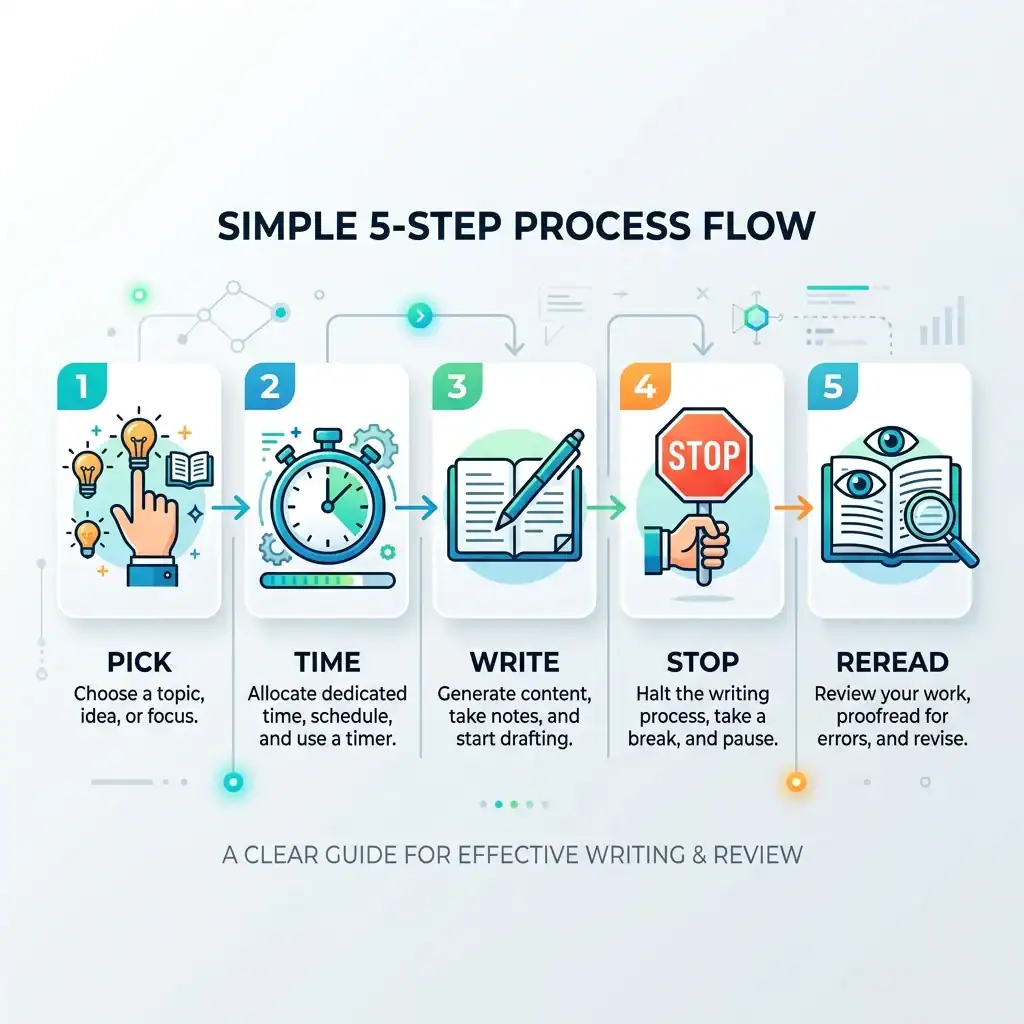
Using a journal prompt is simpler than it sounds. Follow these five steps to get started.
- Pick one prompt that feels doable today. Don’t overthink the choice; any prompt is a fine starting point.
- Set a timer for two to ten minutes. A timer removes the pressure to write “enough.”
- Write without stopping to edit. Let sentences come out messy if they need to.
- Stop when the timer ends, even mid-thought. You can always return to the idea later.
- Reread your entry later only if you want to. Some entries are just for the moment they’re written.
Benefits of Journal Prompts

Journal prompts can make writing feel less intimidating by giving your thoughts a clear direction. Many people find that a specific question is easier to answer than an open blank page.
Some people use a journal prompt during a hard season, when talking feels harder than writing. Others reach for one each morning, right alongside their coffee, as a steady daily habit.
A quick note: journaling is a reflective practice, not a substitute for professional mental health support. If writing brings up more than you can process alone, a therapist or counselor can offer help a notebook can’t.
Quick Journal Prompt Examples

These work well when you only have a few minutes to write.
- What’s one word that describes today? 🔤
- What’s the first thing I noticed when I woke up? 🌅
- What’s on my mind right now, with no filter? ✍️
- What made me smile today, even briefly? 😊
- What’s one thing I’m looking forward to? 🌤️
- What sound is closest to me right now? 🎧
- What’s a small task I finished today? ✅
- What’s one thing I want to remember from today? 📸
- What color matches my mood right now? 🎨
- What’s the last thing that made me laugh? 😂
- What’s one thing I’m grateful for in this moment? 🙏
Deeper Journal Prompt Examples

Give these a bit more time. A few may surface bigger feelings than the quick prompts above.
- What pattern keeps showing up in how I react to stress? 🔁
- What does rest actually feel like for me, without guilt? 🛌
- What belief have I quietly let go of this year? 🌿
- What would I tell a friend who felt exactly like I do right now? 💛
- What part of my day did I rush through without noticing? ⏳
- What’s a fear I’ve outgrown without realizing it? 🦋
- What does “enough” look like for me today? 🌾
- What conversation is still sitting with me from this week? 💬
- What does my inner critic sound like right now? 🗣️
- What am I holding onto that no longer fits who I am? 🎒
- What would change if I trusted my own timing more? 🔑
- What’s one thing I’m proud of that no one else noticed? ⭐
FAQs
Near conclusion

You don’t need to answer all 23 examples today. Pick just one journal prompt that catches your attention and start there. A single honest sentence is enough to begin.
A journal prompt works best as a small, repeatable habit, not a perfect performance. Some days you’ll fill a page; other days, one line will do. Both count.
Keep this guide handy for days when you want to journal but aren’t sure where to begin. After all, the right journal prompt is often all it takes to turn a blank page into a finished entry.