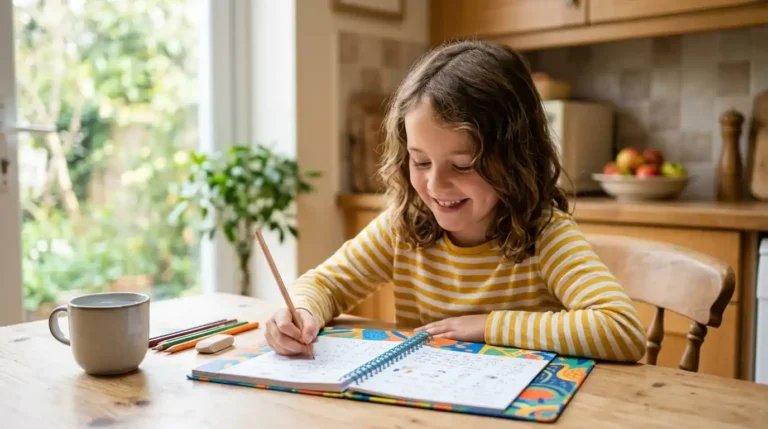

Journaling prompts for teens give anxious minds a safe place to slow down. They turn racing thoughts into words on a page, one small sentence at a time. This list has 27 prompts you can use right now, no notebook rules required.
Anxiety can feel loud and confusing, especially during the teen years. Writing does not erase that feeling. But it can make it smaller and easier to carry. Pick one prompt below and just start.
What are good journaling prompts for teens?
Good journaling prompts for teens are short, specific, and emotionally safe. They ask one clear question instead of several vague ones. The best prompts invite honesty without judgment, use simple language, and leave room for any answers- short or long, calm or messy. They should never feel like a test.
Quick Grounding Prompts for Big Feelings

These prompts work well the moment anxiety spikes. Many teens use them right before a test, during a hard morning, or when their chest feels tight. Keep answers short. One honest sentence counts.
- 🌊 What does my anxiety feel like in my body right now?
- 🧭 Where am I, and what are three things I can see around me?
- ⏱️ What is one thing I can do in the next five minutes to feel steadier?
- 🖐️ What does my hand feel like when I press it flat on the table?
- 🌤️ What is one small good thing that happened today, even a tiny one?
- 🎵 What song or sound would help me feel calmer right now?
- 🔋 On a scale of 1 to 10, how anxious do I feel, and why that number?
- 🪴 What is one thing in my room that feels comforting or familiar?
- 💬 What would I say to a friend who felt exactly this way right now?
Prompts for Naming What’s Wrong
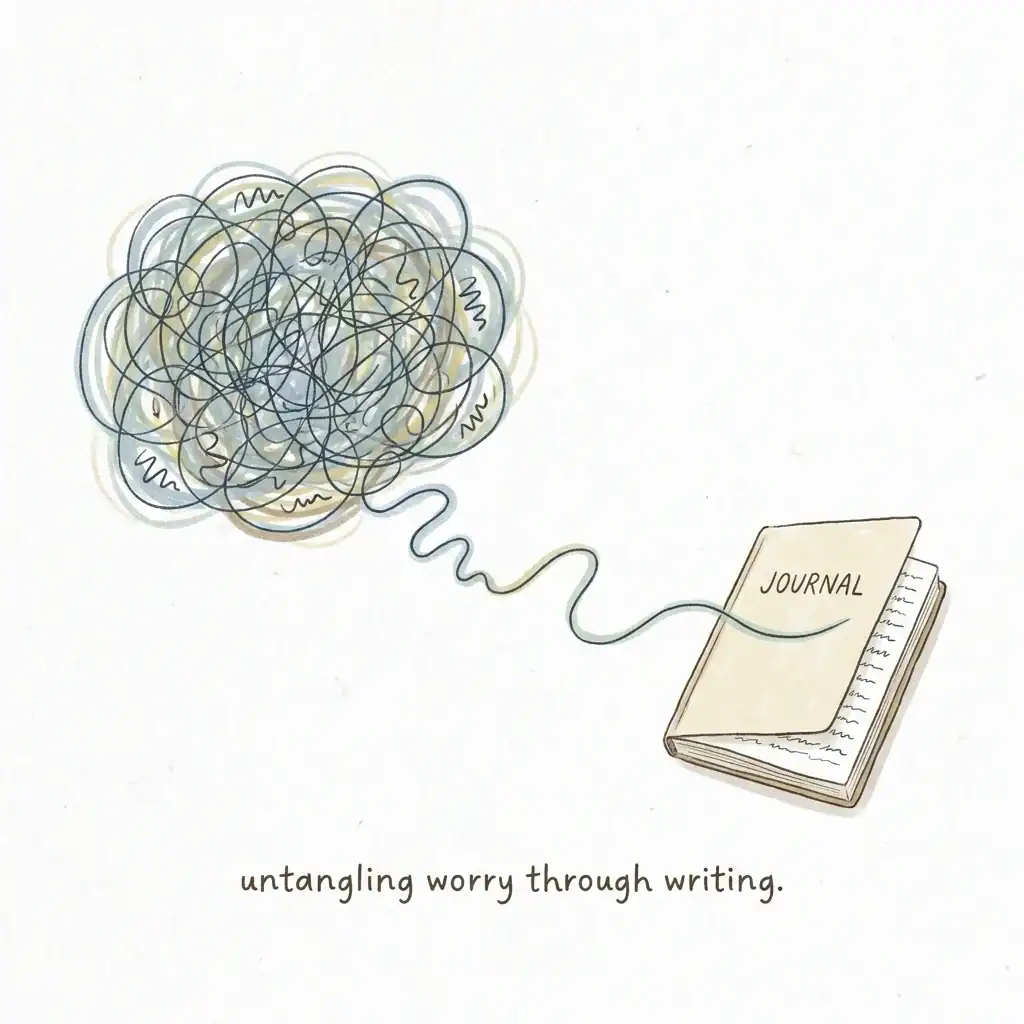
Naming a worry often makes it less overwhelming. Teens use these prompts before bed, after a stressful class, or during a scheduled “worry time.” Writing the worry down can stop it from looping in your head all night.
- 🧩 What is the exact thought that is making me anxious right now?
- 🎭 Am I worried about something that already happened, or something that might happen?
- 🗣️ What is the worst thing I imagine happening, and how likely is that really?
- 🚦 What part of this worry is in my control, and what part is not?
- 📚 What situation today made my anxiety worse than usual?
- 🧵 Is this worry about school, friends, family, or something else entirely?
- 🔍 What evidence do I have that supports this worry being true?
- 🌪️ What evidence do I have that this worry might not be true?
- 🕯️ What do I need right now that I have not asked for yet?
Prompts for Finding Calm and Moving Forward
These prompts help shift focus from the worry itself to what comes next. Some teens write these with morning coffee or tea; others use them right after journaling out a hard feeling above. Either order works.
- 🌱 What is one small step I can take today, even if it feels imperfect?
- 🛟 Who is someone I trust that I could talk to about this?
- 🧠 What would I tell my younger self about handling hard feelings?
- 🎯 What is one thing I can control today, no matter what else happens?
- 🌈 What has helped me get through anxious moments before?
- 🧸 What is something kind I can do for myself today?
- 📖 What is one sentence I want to remember from today?
- 🌻 What am I proud of myself for, even something small?
- 🌙 What is one thing I am looking forward to, even a little?
How to Actually Use These journaling prompts for teens

Pick one prompt, not all 27, especially on hard days. Some teens keep a small notebook by their bed for evening prompts. Others use a notes app during lunch break at school.
There is no wrong way to start. Short answers count. Messy handwriting counts. Skipping a day and coming back later counts too.
A specific prompt works better than a vague one. “What am I feeling?” can feel too big. “What does my anxiety feel like in my body right now?” gives you somewhere concrete to start.
This list is a reflective practice, not a treatment plan. Journaling can support your mental health, but it is not a substitute for talking with a school counselor, therapist, or trusted adult when anxiety feels too big to manage alone.
FAQs: journaling prompts for teens
near conclusion

You do not need all 27 prompts today. Pick just one, maybe the one that felt hardest to read. That is often a sign it is the one you need most.
Anxiety can make everything feel urgent and heavy. A single page in a journal will not fix that overnight. But it can give your thoughts somewhere to land, one honest sentence at a time.
Keep the notebook close. Come back to this list whenever a new feeling shows up. There is no deadline here, only the next blank page.