

Healing journal prompts are short, gentle writing questions that help you process a painful season one page at a time. They work best when they stay specific, feel emotionally safe, and ask for honesty instead of a tidy conclusion. You do not need a beautiful notebook or a daily streak. You need five quiet minutes and one question you are willing to answer.
What are good healing journal prompts?

Good healing journal prompts are specific, emotionally safe, and easy to answer in a few minutes. They name one feeling, moment, or need instead of asking you to explain everything at once. Strong prompts invite honesty without forcing positivity, leave room for uncertainty, and end with something small you can carry into the rest of your day.
What Makes a Healing Journal Prompt Actually Work
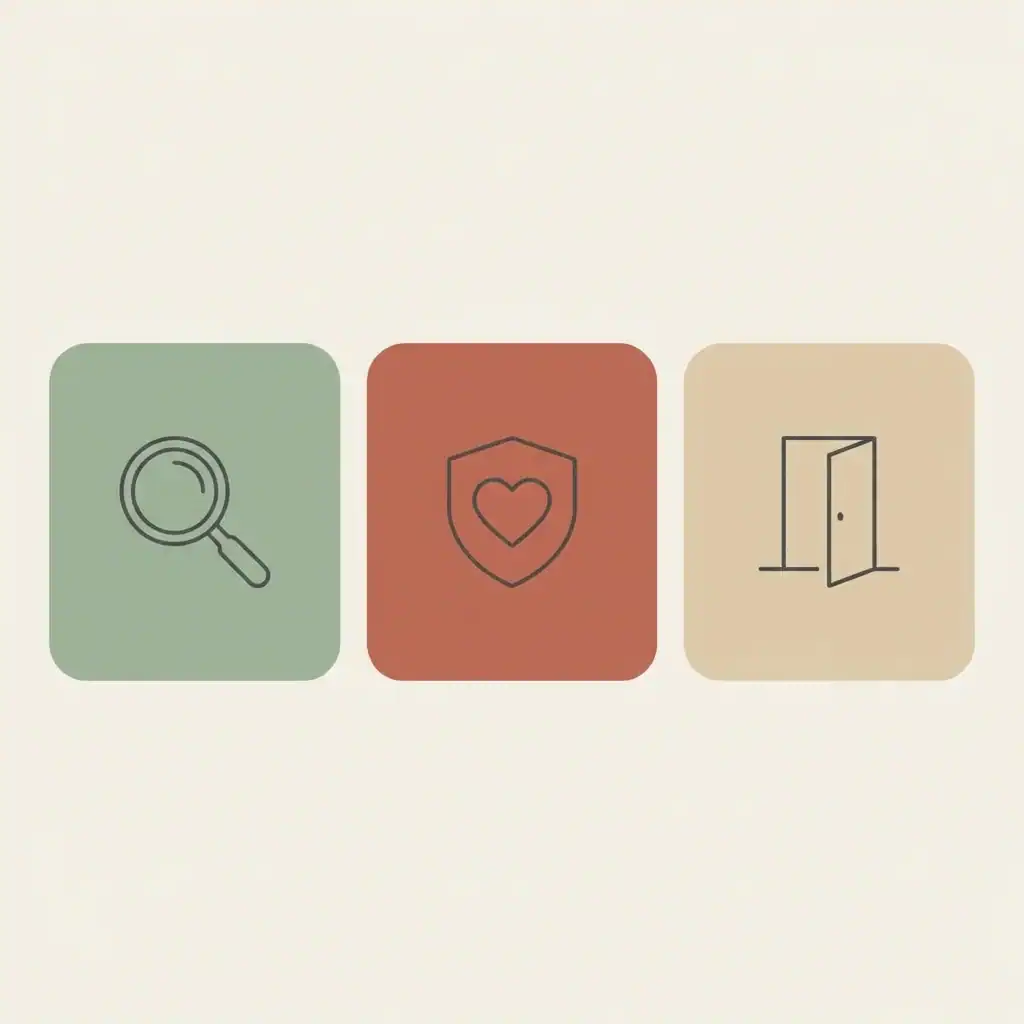
Three things separate a useful prompt from a forgettable one.
Specificity. “How do you feel?” is too wide. “What did your body do when the news came?” gives your pen a place to land.
Emotional safety. A good prompt lets you stop. It never demands that you relive the worst part in detail.
A soft exit. The best prompts close with a small, doable next thought. That keeps you from ending the page raw.
People use these prompts in ordinary ways. Some write a few lines with morning coffee before the house wakes up. Others keep a notebook in the car and write in the parking lot before going inside. Many pair prompts with familiar methods like morning pages from Julia Cameron’s The Artist’s Way, expressive writing, a brain dump, the unsent letter technique, or a simple gratitude journal. A bullet journal in Ryder Carroll’s style works too, with one prompt logged per day.
A note worth saying plainly: journaling is a reflective practice, not a substitute for professional mental health support. If a hard season feels heavier than you can carry, please reach out to a qualified professional.
Healing Journal Prompts for When the Hurt Is Fresh
Start here when everything still feels loud. Keep answers short. One line counts.
- 🕯️ What is the hardest part of today, in one sentence? Write it plainly, without softening it for anyone.
- 🫁 Where does the stress sit in your body right now? Name the exact spot: jaw, chest, shoulders, stomach.
- 📻 What sentence keeps replaying in your head this week? Write it down so it stops looping silently.
- 🧺 What are you carrying today that is not actually yours to carry?
- 🚪 What is one thing you are allowed to stop explaining to people?
- 🌙 What did you need yesterday that nobody offered? Then write how you might offer a small version of it to yourself.
- ☕ What is the smallest comfort that still works? A warm mug, a song, a blanket, a walk to the mailbox.
- 📝 Write an unsent letter to the person or situation that hurt you. Say the unedited version. Nobody reads this page but you.
Healing Journal Prompts for Sitting With the Feeling
These prompts go slower. Give yourself ten minutes and permission to ramble.
- 🌊 Which emotion have you been labeling as “fine” lately? Give it a truer name.
- 🔍 What part of this hard season surprised you most?
- 🪞 What would you say to a close friend living through your exact week? Write it as a letter to them.
- 🎚️ Which feeling are you turning the volume down on, and why?
- 🧩 What story are you telling yourself about why this happened? Then write one other possible explanation.
- ⏳ What are you grieving that other people might not call a loss? A routine, a version of yourself, a plan, a friendship.
- 🔥 What are you angry about that you have not admitted out loud?
- 🌾 What has stayed true about you through this whole season? List three things that did not change.
Healing Journal Prompts for Finding Steady Ground
Use these when you want the day to feel a little more solid.
- 🪟 What is one thing you can see, hear, or touch right now that feels neutral or safe?
- 📅 What is the one task that would make tomorrow 10% easier?
- 🍞 What did you do for your body today? Water, food, rest, movement, fresh air. Count all of it.
- 🤝 Who felt safe to be around this month? Write one specific moment with them.
- 🧭 What boundary would protect your energy this week? Write the exact sentence you would say.
- 🛏️ What does rest look like for you that is not scrolling?
- 🎧 What helps you come back to yourself in five minutes or less? Build a short list you can reuse.
- 📦 What can wait until next month without anything falling apart?
Healing Journal Prompts for Moving Forward

These prompts look ahead gently. Nothing here asks you to be over it.
- 🌱 What is one small thing you want to start again?
- 🚶 What does “a little better” look like for you, realistically? Describe an ordinary Tuesday, not a highlight reel.
- 🔓 What are you ready to loosen your grip on?
- 🗝️ What did this season teach you that you would not hand back?
- ✉️ Write a short note to yourself six months from now. Tell them what you hope they remember about this week.
- 🌤️ What is one moment recently when you felt even slightly lighter? Describe it in detail.
- 🪴 What is the next tiny step, and when this week will you take it? Write the day and the time.
How to Use These Prompts Without Overthinking It

Pick one prompt. Set a timer for five minutes. Write until it rings, then close the notebook.
Skip any prompt that feels like too much today. Skipping is not failing. A prompt you avoid this week may be the right one next month.
Some people work through the list in order. Others open to a random number and answer whatever lands. Both approaches work.
If a page gets heavy, stop and do something grounding. Step outside, drink water, text someone kind. The notebook will still be there later.
FAQs
Conclusion
Hard seasons do not end because you journaled well. But they get a little easier to carry when you stop holding everything silently.
You do not need all 31 prompts. Pick one. The one that made you flinch slightly is usually the right one, though the easiest one counts too.
Open a notebook tonight, write the date, and answer a single question. Five minutes. No editing, no pretty handwriting, no pressure to conclude.
Tomorrow you might skip it entirely. That is fine. Come back Thursday. Come back next week. The page is patient.