

Some nights I’d sit with an empty notebook and close it five minutes later, with no idea what to write. Everything changed when I started answering just one journal prompt a day instead of trying to fill a whole page. Within a week, that single sentence each morning became the easiest habit I’d ever kept.
This 14-Day Challenge works the same way for you. One prompt, one short entry, one day at a time: no blank page, no pressure to write more than you actually have to say.
Key Takeaways
- You’ll get 14 distinct, self-contained prompts across two themed weeks, with no repeats and no generic filler prompts.
- Each entry takes 5–8 minutes, mixing quick writing tasks with small real-world actions and reflection.
- You’ll finish with a short, honest two-week record you can reread anytime you want a check-in.
What Is a Journal Prompt a Day?
A journal prompt a day is a single, specific question or task you answer in writing once every day, rather than journaling freely or all at once. It gives you one clear focus point instead of an open page, which makes the habit easier to start and easier to repeat. Most entries take under ten minutes to complete.
Journaling Methods Behind This Challenge
This challenge borrows ideas from several well-known journaling approaches without copying any one of them exactly. Morning Pages, the method Julia Cameron introduced in The Artist’s Way, uses unfiltered daily writing to clear mental clutter before the day starts. Bullet journaling, created by Ryder Carroll, mixes short reflective notes with quick tracking. Expressive writing, a technique studied by researcher James Pennebaker, focuses on writing honestly about emotions to help process them. Gratitude journaling anchors reflection in specific, positive details rather than vague thankfulness.
People use a daily journal prompt in very ordinary ways during a coffee break, on a train, or in the last five minutes before bed. A strong prompt is specific enough to avoid a blank-page freeze, emotionally safe enough that you’re never forced to overshare, and short enough to finish in one sitting.
One honest note: this challenge is a reflective writing practice, not a form of therapy or clinical treatment. If a prompt brings up something heavier than daily reflection, a licensed therapist or counselor is the right person to talk to, not a notebook.
How the Challenge Works
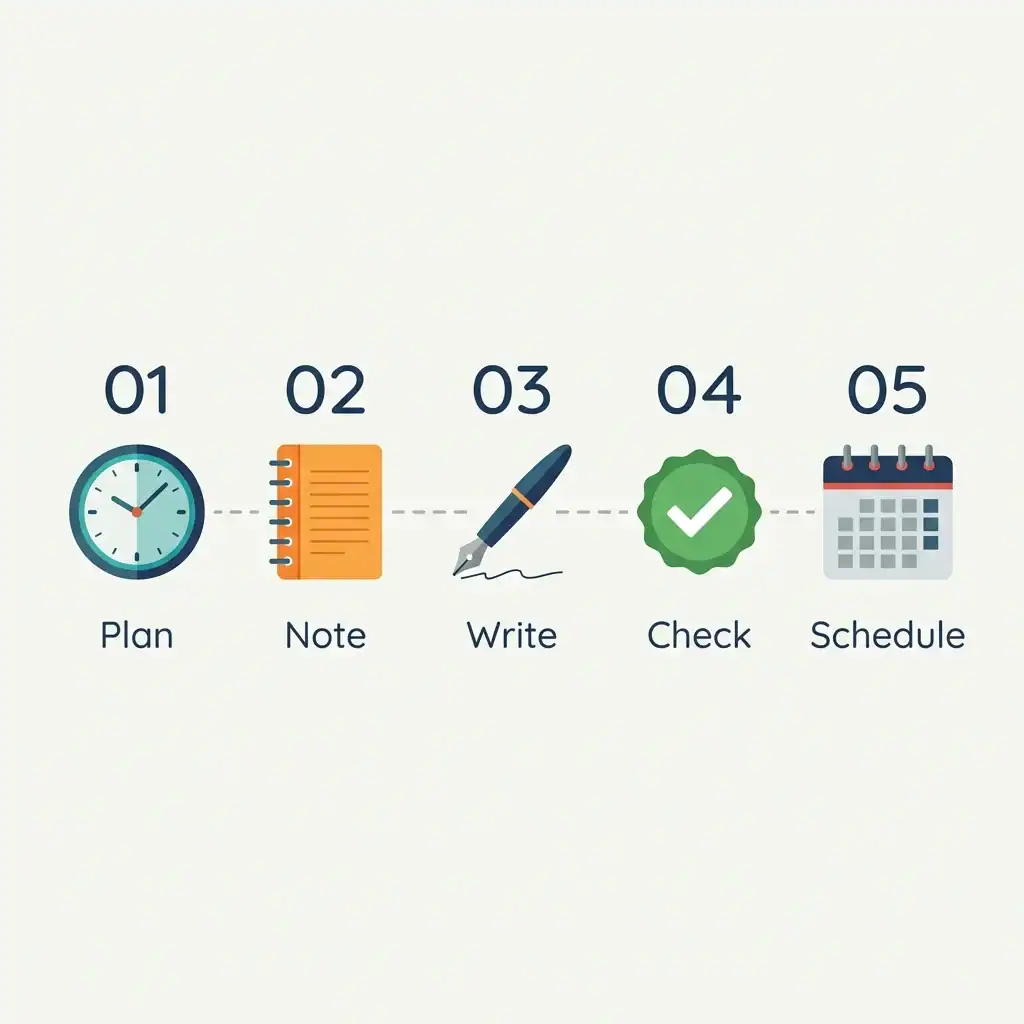
Getting started takes five simple steps.
- Choose one fixed time each day, right after waking up or right before bed; both work well.
- Keep your notebook or notes app within reach so nothing stands between you and the prompt.
- Read the day’s prompt, then set a five-minute timer to keep the entry short and pressure-free.
- Write without editing yourself. Messy handwriting and imperfect grammar are completely fine here.
- Mark the day done and move forward, even if today’s entry feels shorter than yesterday’s.
Prefer to track it visually? Grab our free printable 14-Day Challenge Tracker PDF; it lists all 14 prompts on one page so you can check off each day at a glance.
Motivation naturally dips around Day 7 or Day 8; that’s a normal part of building any new habit, not a sign you’re doing it wrong. If you miss a day, simply continue with the next one. The two weeks don’t need to be perfect to be worth finishing.
Week 1: Daily Journaling Challenge Building the Habit

The first week is about lowering the pressure and getting comfortable putting thoughts into words.
Day 1: Journal prompt of the day: Name Today in One Word
Pick one word that sums up how today feels so far, then write two sentences explaining why you chose it. Why this works: Starting with one word removes the pressure of a full opening paragraph.
Day 2: Journal prompt of the day: The Unplanned Moment
Describe one small thing that happened today that you didn’t expect. Why this works: Noticing the unplanned keeps your attention on the present instead of your to-do list.
Day 3: Journal prompt of the day: A Five-Minute Reset
Step outside for five minutes without your phone, then write three sentences about what you noticed. Why this works: Pairing a short break with reflection often surfaces thoughts that sitting still doesn’t.
Day 4: Journal prompt of the day: The Sentence I’d Never Say Out Loud
Write one honest sentence about today that you wouldn’t say to anyone else. Why this works: Private honesty on paper builds the trust that keeps a journaling habit going.
Day 5: One Thing I’m Avoiding
Name one task you’ve been putting off, then write two sentences about why. Why this works: Naming avoidance directly is often the first step toward loosening its grip.
Day 6: Send One Kind Message
Send a genuine compliment to one person today, then write a sentence about their response. Why this works: A small real-world action turns reflection into connection, not just introspection.
Day 7: Week One Check-In
Reread your six entries from this week and write two sentences about what surprised you. Why this works: A short weekly review makes the habit feel like progress instead of scattered notes.
Week 2: Daily Journal Prompts Getting Specific

Journal prompt a day. Week two moves from general reflection toward the specific choices, people, and moments shaping your days.
Day 8: Journal prompt: The Default I Didn’t Choose
Describe one habit you do on autopilot, then write two sentences on whether it still fits you. Why this works: Naming autopilot behavior is the first step toward changing it deliberately.
Day 9: A Conversation Worth Remembering
Write about one conversation today that stuck with you, and explain why in two sentences. Why this works: Replaying conversations on paper often reveals what you actually think, not just what you said aloud.
Day 10: The Permission Slip
Write yourself a two-sentence permission slip to rest, skip something, or say no this week. Why this works: Putting permission in writing makes it noticeably easier to follow through on.
Day 11: One Small Repair
If something feels slightly off with someone, write two sentences about one small way to reconnect. Why this works: A small repair feels far more doable on paper than a single big conversation.
Day 12: The Compliment I’d Give Myself
Write two sentences complimenting yourself the way you’d compliment a close friend. Why this works: Practicing self-compassion in writing is a low-pressure way to build the skill.
Day 13: Ask for One Thing
Ask one person for a small piece of help today, then write a sentence about how it felt. Why this works: Practicing small asks builds comfort with bigger ones later on.
Day 14: Write Your Own Prompt
Write your own journal prompt for tomorrow, then answer it in two or three sentences. Why this works: Creating your own prompt proves you no longer need someone else’s list to keep going.
FAQs: journal prompt a day

Conclusion
Two weeks from now, you won’t have a perfect journal prompt a day; you’ll have fourteen honest snapshots of your daily life. That’s more than most people manage to keep. Start with Day 1 today, and if you’d like every prompt in one place, download the free printable 14-Day Challenge Tracker PDF and check off your first day right now.