

Night journaling prompts help you empty a busy mind before bed, so sleep comes easier. They shift your brain from problem-solving mode to a calmer, more reflective state. Below are 17 fresh prompts you can use tonight, plus tips on how to build them into a simple bedtime routine.
What are good night journaling prompts?
Good night journaling prompts are short, specific questions that help you process the day instead of replaying it in your head. They focus on release, not analysis. The best prompts feel emotionally safe, avoid pressure to “fix” anything, and end on a grounding note. This makes it easier to close the notebook and drift off.
Quick Calm-Down Night Journaling Prompts

These are one-liner prompts. Use them on nights when your energy is low, and you want a quick mental reset.
- What is one thing from today that I can let go of before I sleep? 🌙
- What made me smile today, even briefly? 😊
- What sound, smell, or feeling made me feel safe today? 🕯️
- What is one worry I can hand over to tomorrow-me? 📝
- What am I proud of myself for today, no matter how small? ⭐
- What is one word that describes how my body feels right now? 🌿
- Who or what am I grateful for tonight? 💛
- What do I want to release before I close my eyes? 🌊
Deeper Reflection Night Journaling Prompts
These prompts take a bit more time. Try them when you have five to ten quiet minutes before bed and want to dig a little deeper.
- What pattern did I notice in myself today, and how did it feel? 🔍
- If today had a title, what would it be and why? 📖
- What conversation is still sitting with me, and what do I wish I’d said? 💬
- What is one thing I’m avoiding thinking about, and what would happen if I named it? 🌀
- What did I learn about myself this week that surprised me? 🌱
- How did I show care toward myself today, and where could I have offered more? 🤍
- What does “enough” feel like for today, even if the day was messy? ⚖️
- What would I tell a friend who had the exact day I just had? 🫂
- What small hope am I carrying into tomorrow? 🌅
How People Actually Use These Prompts
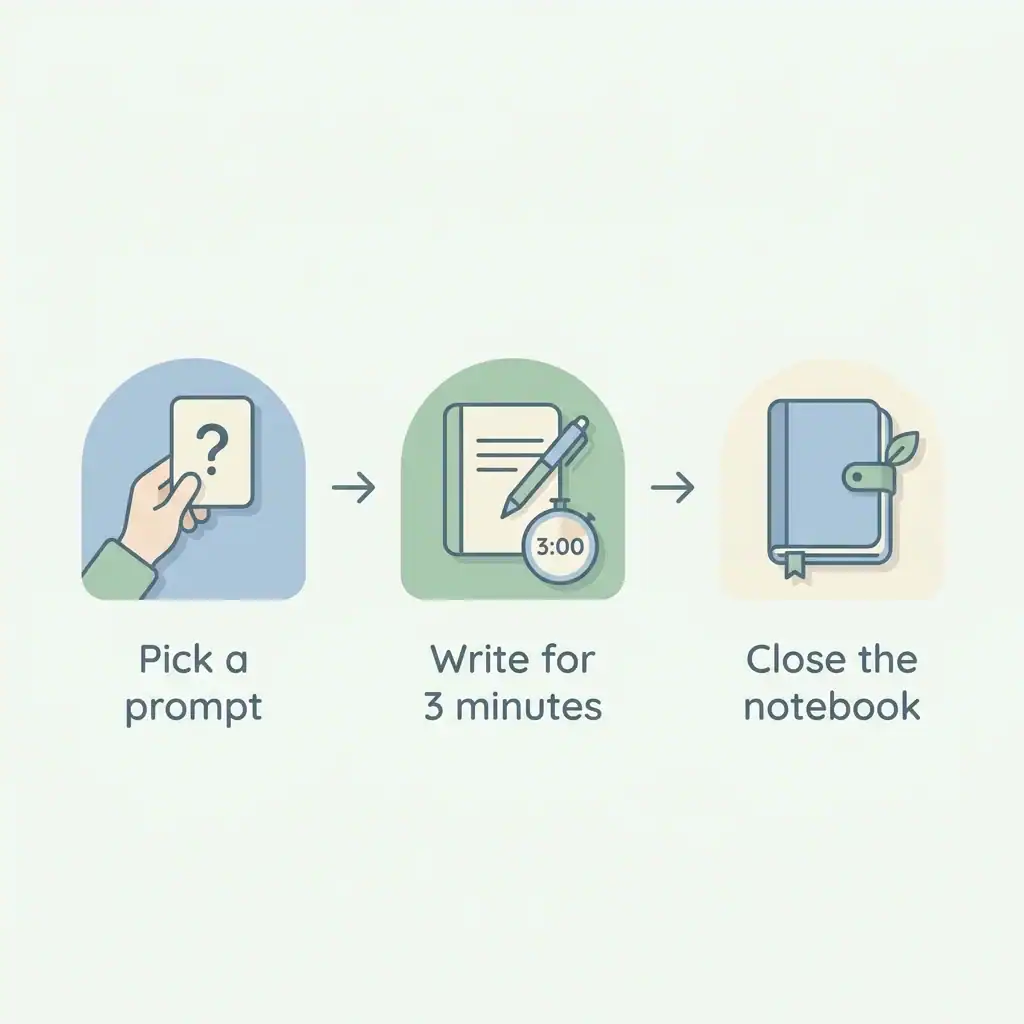
Most people don’t journal for an hour before bed. A common approach is picking just one prompt and writing for two or three minutes, often right after brushing teeth or setting an alarm. Some pair a prompt with a cup of chamomile tea or dim lighting as a cue that the day is winding down.
Others borrow structure from established methods. A brain dump style, where you write every loose thought without editing, works well on high-stress nights. A short gratitude journaling entry, listing three specific things, suits calmer nights. People who like more structure sometimes adapt bullet journaling shorthand, jotting single words instead of full sentences. None of these require special training. They just need a notebook and a few honest minutes.
What Makes a Night Journal Prompt Actually Good
A strong prompt is specific enough to answer quickly but open enough to feel personal. It should feel emotionally safe, meaning it invites reflection without pushing you toward a hard truth you’re not ready for. Good prompts also end on release or grounding, not on more analysis, so your mind has somewhere to land before sleep.
Building a Simple Sleep Journaling Routine
- Keep it short. Two to five minutes is plenty most nights.
- Same time, same spot. Pairing journaling with an existing habit, like turning off screens, builds consistency.
- Skip nights without guilt. A missed night doesn’t undo the routine.
- Reread occasionally. Flipping back a few weeks later often shows patterns you couldn’t see day-to-day.
A quick note: journaling is a reflective practice, not a substitute for professional mental health support. If sleep struggles or racing thoughts feel persistent or overwhelming, talking with a doctor or therapist is a good next step.
FAQs
conclusion

Better sleep rarely begins with a perfect bedtime routine. Sometimes, it starts with one honest sentence written in a notebook instead of replaying the same thoughts in your head all night. When your mind feels busy with unfinished tasks, worries, or emotions, writing them down can make it easier to settle before bed. Choose one sleep journal prompt from this list, keep your notebook beside your bed, and give yourself a few quiet minutes to reflect tonight.
You don’t need to answer every prompt or write several pages to make journaling worthwhile. Even a few simple sentences can help you recognize what is weighing on your mind and what you can leave for tomorrow. Try writing about one thing that went well, something you are worried about, or a thought you want to release before sleeping. There is no right or wrong way to complete your entry.
Creating a small nighttime journaling habit can also make your evenings feel more intentional. Over time, you may begin to notice patterns in your thoughts, identify common sources of stress, and understand what helps you feel more relaxed. Keep your expectations realistic and avoid turning journaling into another task you must complete perfectly. Let your notebook be a private space where you can write freely without judging your words.
Some nights, your entry may be only two sentences. On other nights, you may have more to express. Both are perfectly fine. What matters is giving yourself a little space to reflect, slow down, and prepare for rest. Let tonight’s entry be short, honest, and enough.