

A single sentence changed my mornings more than any planner ever did. Three years ago, I started answering one daily journal prompt before checking my phone, and within two weeks my mind felt noticeably quieter before 9 a.m. That small habit is the seed of this 30-day challenge: one prompt, one page, one day at a time.
You don’t need a special notebook or an hour of free time. You need five minutes and a willingness to show up, even when the answer is short or messy.
Key Takeaways with daily journal prompts
- You’ll get 30 distinct, self-contained prompts, one per day, grouped into five themed weeks, with zero repeats.
- Each prompt takes 5–10 minutes and mixes short writing tasks with tiny real-world actions plus reflection.
- You’ll learn why each prompt works, so you can keep building your own prompts after Day 30.
What Is a Daily Journal Prompt?
A daily journal prompt is a short question or task, answered in writing, that gives your reflection time direction. It removes the “what do I even write about” hesitation that stops most people before they start. Instead of a blank page, you get one clear focus point each day, which makes the habit easier to repeat and easier to finish.
Popular Journaling Methods Behind This Challenge
Several well-known daily journal prompt styles shape the prompts you’ll see in this 30-day challenge. Morning Pages, a method popularized by Julia Cameron in The Artist’s Way, encourages three pages of unfiltered stream-of-consciousness writing first thing in the day. Bullet journaling, created by Ryder Carroll, blends short reflective notes with quick tracking and lists. The Five-Minute Journal format popularized gratitude-plus-intention prompts done in under five minutes. Expressive writing, a technique studied by researcher James Pennebaker, focuses on writing honestly about emotions to process them on paper.
In the real world, people use one-prompt-a-day journaling during a morning coffee, on a commute, or as a wind-down step before bed. A good prompt is specific enough to avoid a blank-page freeze, emotionally safe enough that you’re not forced into oversharing, and short enough to finish in one sitting. This challenge borrows ideas from each method above without copying any single one exactly, so every day feels fresh.
A quick, honest note: the daily journal prompt here is a reflective practice, not therapy and not a diagnostic tool. If you’re working through something heavier than daily reflection, a licensed therapist or counselor is the right resource, not a notebook.
How the Challenge Works: one-daily-journal-prompt-30-days
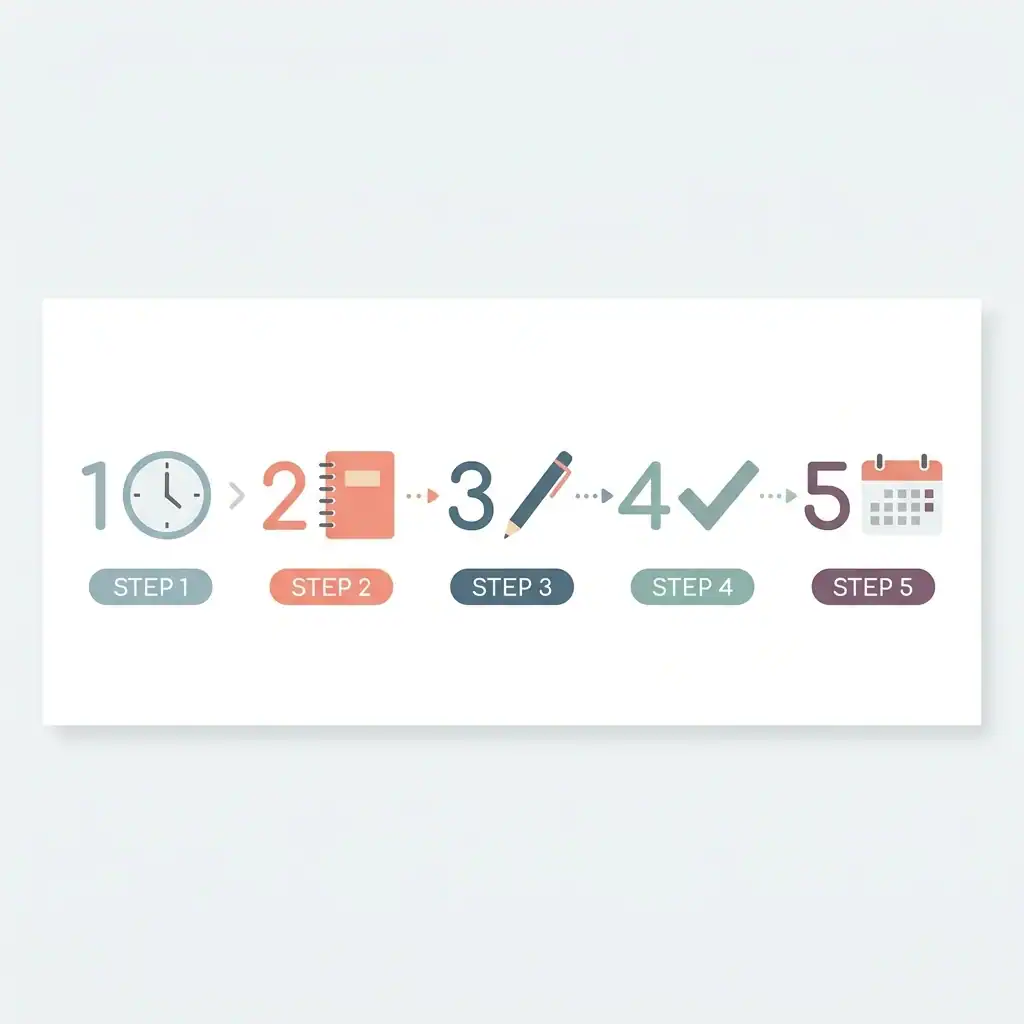
Getting started only takes five steps.
- Pick one fixed time. Morning coffee, lunch break, or right before bed consistency matters more than the hour.
- Keep your notebook (or notes app) within reach so there’s no extra step between the prompt and the page.
- Read the day’s prompt first, then set a five-minute timer. This keeps the entry short and pressure-free.
- Write without editing. Grammar and neat handwriting don’t matter here; honesty does.
- Check the day off and move on, even if the entry feels short or incomplete.
Want to skip the setup? Grab our free printable 30-Day Challenge Tracker PDF; it lists all 30 prompts on one sheet so you can check off each day without scrolling back to this guide.
Motivation naturally dips around Day 10 or Day 20; that’s normal, not failure. If you miss a day, just pick up on the next one. The streak isn’t the point; the habit is.
Week 1: Getting Comfortable With the Page of a Daily Journal Prompt

This first week is about lowering the pressure. The goal is simply to get words on paper without overthinking them.
Day 1: Daily journal prompt: Start Where You Are
Describe your morning so far in exactly five sentences, nothing more. Why this works: A hard limit removes the pressure to write something profound.
Day 2: Daily journal prompt: Name One Small Win
Write down one thing, however tiny, that you did well yesterday. Why this works: Naming small wins trains your attention toward progress instead of gaps.
Day 3: Daily journal prompt: The Five-Minute Walk
Take a five-minute walk with no phone, then write three sentences about what you noticed. Why this works: Pairing movement with reflection often surfaces thoughts sitting still doesn’t.
Day 4: Finish This Sentence
Complete this line ten times: “Right now, I feel ___ because ___.” Why this works: Repetition helps you spot patterns in your mood you might otherwise miss.
Day 5: One Honest Sentence
Write one sentence you wouldn’t say out loud to anyone else today. Why this works: Private honesty on paper builds the trust that makes journaling worth continuing.
Day 6: Sound Check
List three sounds you can hear right now, then write two sentences about how they make you feel. Why this works: Grounding in your senses pulls focus out of your head and into the present moment.
Day 7: Week One Recap
Reread your six entries so far and write two sentences about what surprised you. Why this works: A short review after a week helps the habit feel real instead of scattered.
Week 2: Getting to Know Your Patterns WITH daily journal prompt
Week two moves from warming up to noticing repeated habits, moods, and reactions.
Day 8: The Energy Map
Rate your energy from 1–10 at three points today, then write one sentence explaining the lowest number. Why this works: Tracking energy in real time is more accurate than guessing after the fact.
Day 9: A Conversation Replay
Write about one conversation today that stuck with you and why it did. Why this works: Replaying conversations on paper often reveals what you actually think, not just what you said.
Day 10: The Permission Slip
Write yourself a two-sentence permission slip to rest, skip something, or say no this week. Why this works: Putting permission in writing makes it easier to actually follow through on it.
Day 11: One Thing I’m Avoiding
Name one task you’re avoiding, then write two sentences about why. Why this works: Naming avoidance on paper is often the first step to loosening its grip.
Day 12: Send a Message
Text or message one person a genuine compliment, then write one sentence about their reply. Why this works: Small real-world actions turn reflection into connection, not just introspection.
Day 13: The Body Check
Write three sentences describing any tension you’re holding in your body right now. Why this works: Physical awareness often uncovers stress your mind hasn’t consciously named yet.
Day 14: Week Two Recap
Circle any word that repeats across this week’s entries and write one sentence about it. Why this works: Repeated words are often a quiet signal for what’s actually on your mind.
Week 3: Getting Curious About Your Choices A daily journal prompt

This week shifts toward the decisions, habits, and defaults that shape your daily life.
Day 15: The Default Setting
Describe one habit you do on autopilot, then write two sentences about whether it still serves you. Why this works: Naming autopilot behavior is the first step toward changing it on purpose.
Day 16: A Tiny Swap
Replace one small daily choice today (drink, route, playlist) and write two sentences on the difference. Why this works: Small deliberate swaps make you more aware of choices you usually make without thinking.
Day 17: Money and Meaning
Write three sentences about one purchase this month that felt genuinely worth it, and why. Why this works: Connecting spending to values clarifies what actually matters to you.
Day 18: The Compliment I’d Give Myself
Write two sentences complimenting yourself the way you’d compliment a close friend. Why this works: Self-compassion is a skill, and writing it down is a low-pressure way to practice it.
Day 19: One Boundary
Describe one boundary you kept this week, even a small one, and how it felt. Why this works: Recording boundaries reinforces that keeping them is a skill worth building.
Day 20: The Undone List
List three tasks still undone, then write one sentence about which one actually matters. Why this works: Sorting tasks by importance, not just length, reduces the guilt of an unfinished list.
Day 21: Week Three Recap
Write two sentences about one choice this week you’re proud you made. Why this works: Reviewing choices, not just moods, builds confidence in your own judgment.
Week 4: Getting Honest About Relationships with daily journal prompt

Week four turns attention outward, toward the people and connections in your Daily Journal Prompt life.
Day 22: A Thank-You Note
Write a short thank-you note to someone, real or unsent, and describe why they matter. Why this works: Gratitude aimed at a specific person feels more concrete than generic gratitude lists.
Day 23: The Hard Conversation
Write two sentences about a conversation you’ve been putting off, and one small next step. Why this works: Naming the next step, not the whole conversation, makes it feel more possible.
Day 24: Who Recharges Me
Name one person who leaves you feeling more like yourself, and write why. Why this works: Identifying who energizes you helps you protect time for those relationships.
Day 25: An Old Memory
Write three sentences about a memory with a friend or family member that still makes you smile. Why this works: Revisiting good memories on paper reinforces the relationships worth nurturing.
Day 26: A Small Repair
If something feels slightly off with someone, write two sentences about one small way to reconnect. Why this works: Small repairs are easier to start than a single big conversation.
Day 27: Ask for Help
Ask one person for a small piece of help today, then write one sentence about how it felt. Why this works: Practicing small asks builds comfort with the bigger ones later.
Day 28: Week Four Recap
Write two sentences about which relationship felt most present in your entries this week. Why this works: Patterns in who you write about often reveal where your attention naturally goes.
Final Days of a daily journal prompt: Looking Back and Looking Forward
The last two days help you close the challenge and decide what comes next.
Day 29: The Full Reread
Read all 28 previous entries in one sitting, then write three sentences about the biggest shift you notice. Why this works: Seeing a month of entries together shows growth a single day never could.
Day 30: Your Own Prompt
Write your own journal prompt for Day 31, then answer it. Why this works: Writing your own prompt proves you no longer need someone else’s list to keep going.
FAQs one-daily-journal-prompt-30-days

Conclusion one-daily-journal-prompt-30-days

Thirty days from now, you won’t have a perfect journal; you’ll have thirty honest snapshots of a month in your life. That’s a better record than most people keep. Start with Day 1 today, and if you want every prompt in one place, download the free printable 30-Day Challenge Tracker PDF and check off your first day right now.